
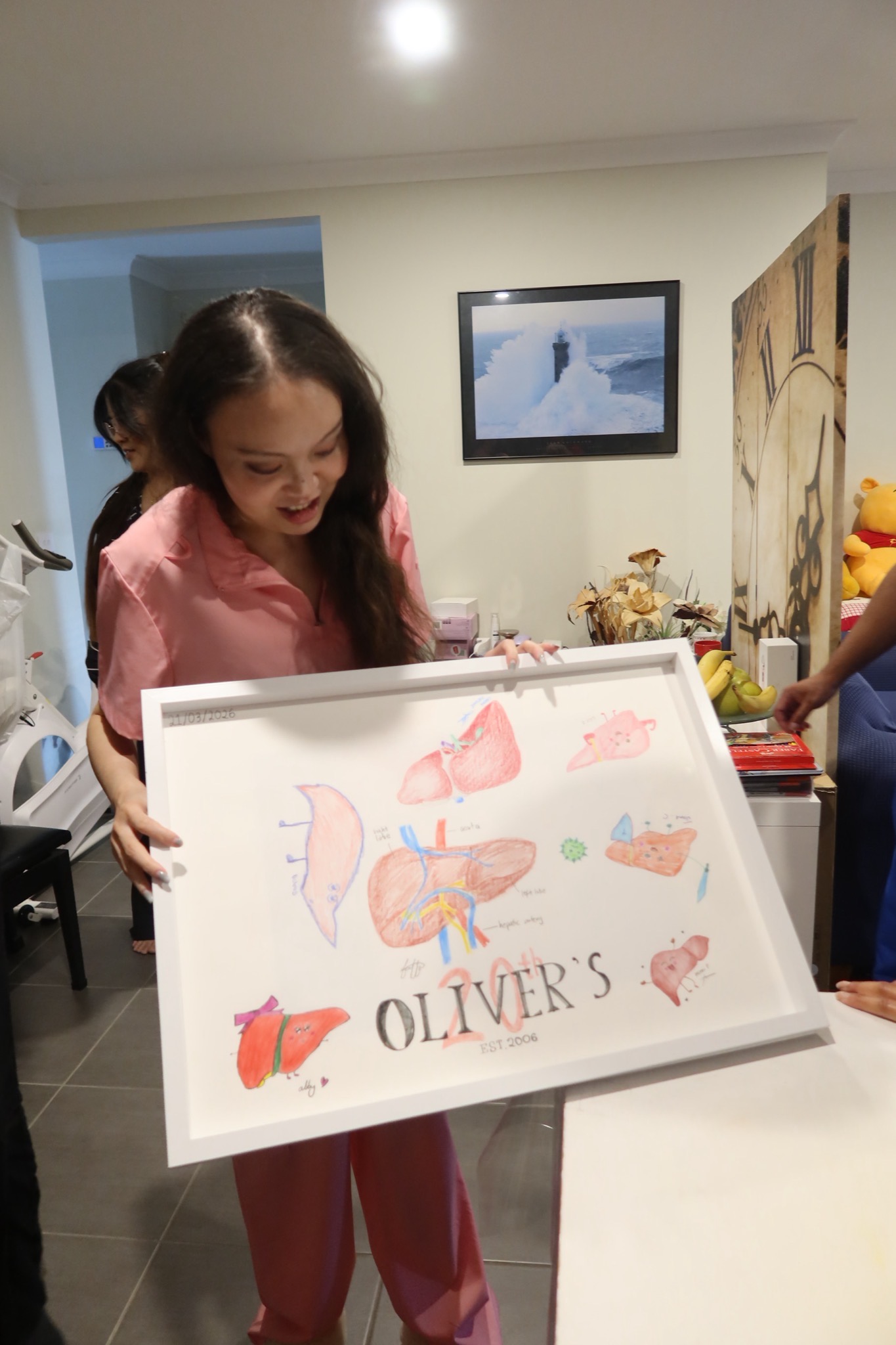
30 March, 2006 – 30 March, 2026
Alagille Syndrome & 20 Years Post-Liver Transplant
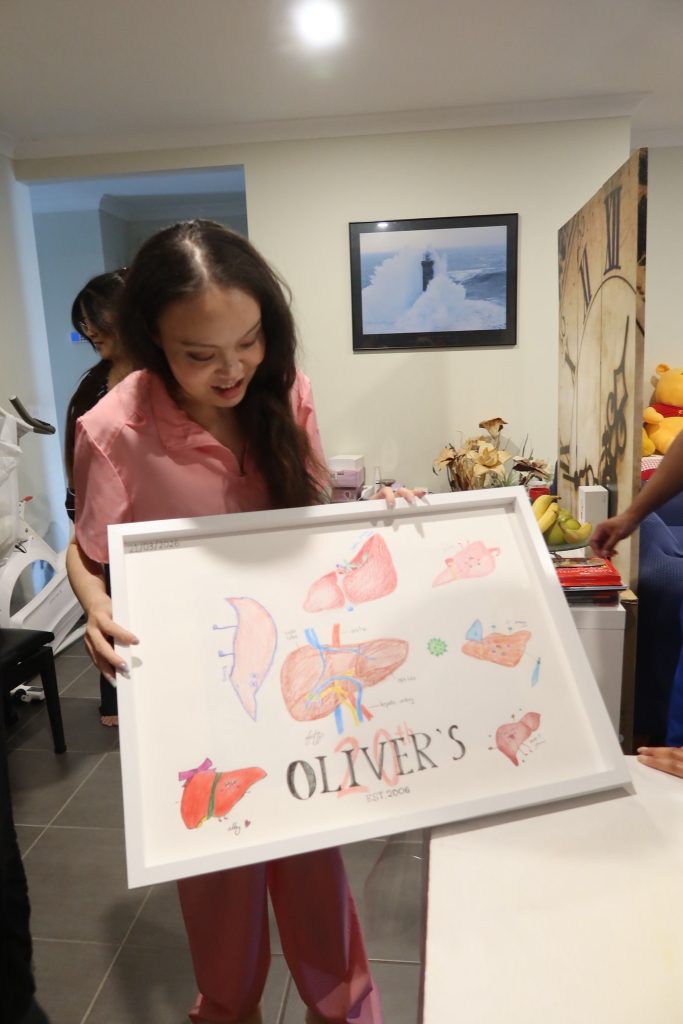
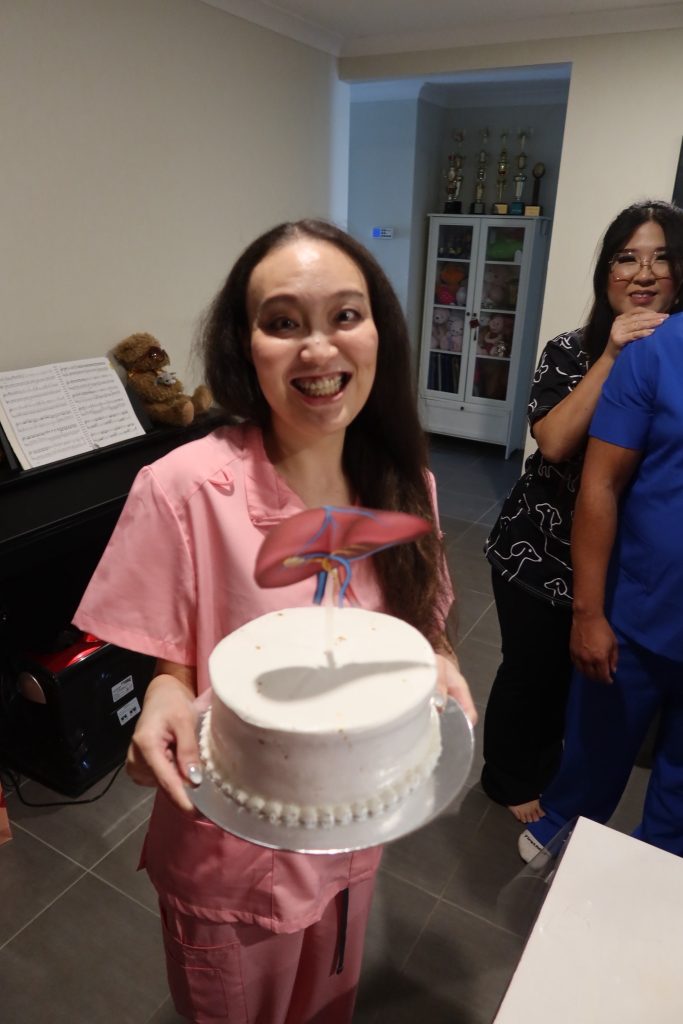
There are anniversaries you celebrate with cake and balloons, and then there are anniversaries that stop you in your tracks, the kind that raises your eyes and think, Wow! I had a liver transplant 20 years ago?! My liver transplant anniversary is the second kind (although, I did have a cake for Oliver).
20 years, I’ve been sitting with that number for a while now, turning it over like a smooth stone in my palm. Two decades since a surgical team cracked open my body and gave me a fighting chance at life (Thank God for the good Australian medical standard). Two decades of immunosuppressants, countless checkups, bloodwork panels, and all the invisible labour that comes with living inside a body that once tried to give up on itself. 20 years since Alagille Syndrome stopped being the thing that might kill me.

What is Alagille Syndrome?
If you’re new here, let me give you the short version, Alagille Syndrome is a rare genetic disorder caused by a mutation in the JAG1 gene, it affects the liver, heart, eyes, spine, facial features and more – a whole body condition masquerading as a liver disease. For me, the defining feature was always my liver. the bile ducts inside it were too few and too narrow, which means bile couldn’t drain properly. It built up. It scarred. It damaged. By the time I was a child, my liver was losing a battle it was never equipped to win. The itching alone (that relentless, deep-in-the-bone itch that comes from bile acids building up under your skin), is something I wouldn’t wish on my worst enemy (not that I have any enemies). There aren’t enough words to explain what it does to a person, especially a small child who doesn’t yet understand why her body feels like it’s on fire from the inside.
Liver transplant became not a question of if but when

Alagille Syndrome Led to Liver Transplant
I don’t remember Every Single Detail of the transplant itself. What I do remember are the feelings: the sterile brightness of hospital corridors, the way my mum stood and sat beside me. I remember waking up and feeling groggy and exhausted from the anaesthetic and the 12+ hour long surgery (more in mybook).
The years immediately after transplant were not a triumph montage. Recovery is long and unglamorous. There were rejection scars. There were medication adjustments. There were serious side effects. There was a near- death experience.
Life Doesn’t Stop After Liver Transplant – There’s More to Alagille Syndrome
20 years is long enough to know that life post-transplant is not a simple before-and-after story. It is its own ongoing thing (plus, I haven’t even mention other conditions I live with due to Alagille Syndrome – my heart, my vision, etc). The immunosuppressants I take every day to stop my body from rejecting my liver are the reason I’m here (Thank God), and they also mean my immune system is permanently dialled down. If I catch a cold, it lingers a little longer. If infection occurs, it warrants a little more attention. My countless checkups are not optional, they are a covenant I keep with the organ inside me.
I’ve thought about my donor I don’t know his/her name. I don’t know his/her story. But what I know is I have felt like my life is not living up to the bar (that I’ve placed myself), as it there is a responsibility to live a worthwhile life (if this makes sense). But this is not all a bad thing, the drive to live a worthwhile life is a noble pursuit.
In my 20 years of being a post-liver transplant patient, I can’t say I’ve never asked the question, “Did I deserve this new liver?” and “Why did I receive it?” I asked this question not in a depressing way, “Oh, I’m so worthless. I don’t deserve this.” and not in an ungrateful way, “I didn’t ask for this! Why did you give me a new liver!” Instead, I asked this question, wondering and pondering, why did I receive it? Because I’m just like any other patient. There’s nothing extraordinary about me. I’m just like any other human being. I’ve asked this question a few times. But what I’ve learned is, it is not up to me to think whether or not I deserve a new liver, a life extension – it is up to God. It is up to God to decide that I deserve this.
What Living With Alagille Syndrome Looks Like in My 30s
Living with Alagille Syndrome in my 30s looks different compared to when I was 3 and 13, who didn’t carry the full weight of my chronic illness (in terms of head knowledge of all my medical conditions and treatments). Now I don’t just carry the weight of Alagille Syndrome, but I also carry the knowledge of my chronic illness (and disability – I’m visually impaired, I have a slight hearing loss and a slower learning pace).
I still see specialist. I still have medical records everywhere I go. I still explain my condition to new doctors. Alagille Syndrome is rare enough that I’ve met doctors who don’t know about it. In a way, I’ve become my own advocate for Alagille Syndrome.
I’m not in remission. Alagille Syndrome doesn’t work like that, it’s genetic, woven into every cell of me. My new liver doesn’t have the syndrome, but the rest of my body still does, which means ongoing monitoring of my heart and other parts of my body for the rest of my life (including other medical conditions that’s not from my Alagille Syndrome). Thanks to God’s work in me (explained in my book), I have accepted this. And yes, there will still be days where it feels heavy, moments of fear, the low hum of awareness that my sickness is more complex than most people my age. But there is also this: I am here. I am genuinely abundantly here. More importantly, I have a Saviour who is not out of touch with my reality (Hebrews 4:15-16 MSG) and I’ve learned to rely on Him.
20 years ago, a family in their worst moment chose generosity. Surgeons did what surgeons do. My body, imperfect and determined, held on. And now here I am, writing about it.

Alagille Syndrome & Organ Donation
If you are reading this as a parent whose child has just been diagnosed with Alagille Syndrome, I want you to know there is life ahead. Long, full, complicated, ordinary, extraordinary life. If you are reading this as someone who shares this diagnosis, I want you to know: you are not alone in this rare club, and the road ahead is longer and wider than you can see from where you’re standing.
And if you’re reading this as someone who checked the organ and tissue donor box on your Medicare account/records, or who is considering it, thank you.